
The Next Generation of Storage: IBM FlashSystem x600
5 minutes
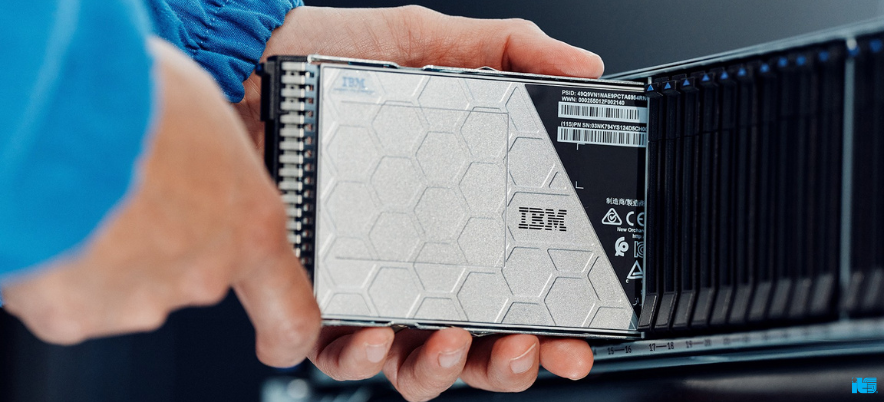
In February 2026, IBM introduced a new generation of FlashSystem.ai storage systems—specifically the 5600, 7600, and 9600 series—which build on the long-proven IBM Storage Virtualize platform while delivering several significant advancements in performance, data efficiency, cyber resilience, and management automation.
At first glance, the new series may seem like just another hardware refresh. Upon closer inspection, however, it becomes clear that IBM is responding to several very specific operational trends with this move: growing data volumes, pressure for greater efficiency in data centers, a shortage of specialized administrators, and, at the same time, ever-increasing demands for ransomware resilience and rapid recovery.
For organizations currently addressing infrastructure modernization and consolidation—and data security in particular—it is therefore worth considering the new FlashSystem series not merely as “faster storage,” but as a platform designed to reduce operational complexity and improve control over the environment.
What's important about the new generation of FlashSystem
The main change in the new generation is that storage is shifting from the traditional model—where an administrator manually monitors, tunes, and resolves incidents—to a model where the system plays a much greater role in ongoing optimization, problem detection, and recommending next steps.
In practice, this results in three things:
- Higher performance and data density
- Greater automation and easier management
- Greater cyber and operational resilience
It is precisely this combination of three factors that will be more important to most CTOs and infrastructure teams than the raw specifications alone.
Automation of Storage Management and the Role of AI in Storage Operations
One of the main themes of the new generation is FlashSystem.ai, a suite of intelligent data services and automation mechanisms. In marketing materials, this may sound like just another AI buzzword, but for a technical audience, it’s important to note that these features come to life through tight integration with the IBM Storage Insights Pro analytics tool.
The primary purpose of such functions is to enable the system to assist with tasks that are currently routine, repetitive, and operationally sensitive:
- ongoing evaluation of performance and capacity behavior,
- detection of anomalies,
- recommendations for optimization,
- better information on which to base decisions during an incident or during recovery.
In other words, it’s not just about “AI in storage,” but about bridging the gap between what the system can technically detect and what the administrator must manually interpret and resolve. In environments where a single team manages a large number of systems and lacks the capacity to spend time on constant fine-tuning, this offers a real benefit.
Performance and Data Efficiency: Why It's Not Just About IOPS
The new generation also delivers higher performance and data efficiency, but more importantly, IBM’s improvements are built into the entire architecture. In addition to controllers and buses, the evolution of storage media and their formats is also significant. With its new storage systems, IBM is transitioning to the EDSFF ( Enterprise and Datacenter Standard Form Factor) format, which massively increases data density. The new generation (especially the higher-end models) can thus reduce the physical footprint by 30 to 75% and cut operating costs by up to57% thanks to greater consolidation.
Of particular interest is the FlashSystem 5600 model, which—even in its compact 1U form factor —is designed for scenarios where space is limited but performance and reliability requirements remain high. This is relevant, for example, for:
- smaller data centers,
- branch deployment,
- an environment where multiple workloads need to be consolidated.
However, when making a decision, it makes the most sense to focus not on the maximum IOPS advertised in marketing materials, but on what the platform can actually handle with data services enabled (deduplication, compression, encryption, snapshots). That is where the difference between a “fast array on paper” and a truly usable platform becomes apparent in real-world operations.
FlashCore Module 5: Why They Are Important for Security, Too
One of the most technically interesting features is the proprietary FlashCore Module 5 (FCM5). IBM has long based part of its value proposition on its proprietary modules, to which it offloads functions that would otherwise burden the central controllers.
This has two major consequences:
- Performance: When compression, deduplication, or analytics are performed directly at the module level, controllers have more resources available for actual I/O processing.
- Security: With FCM5, IBM highlights hardware-accelerated ransomware detection (with threat identification in under a minute), advanced telemetry, and multiple layers of data protection. Storage thus becomes an active component of the security architecture.
For the security and infrastructure team, a combination of three things is important:
- rapid detection of anomalous behavior,
- the ability to maintain consistent, unchanging recovery data,
- a quick and manageable return to normal operations.
Storage alone won’t solve the ransomware problem, but thanks to telemetry and snapshots, it can drastically reduce the time between problem detection and a usable recovery.
Cybersecurity is no longer an optional extra, but a requirement
Today, cyber resilience is playing an increasingly important role in storage decisions. Organizations are no longer just asking “how fast is it?”, but also:
- How can I tell right away that something is wrong?
- how quickly we can pinpoint the problem,
- how many high-quality recovery points we have available,
- how difficult the recovery process would be in the event of an actual incident.
In this regard, the new FlashSystem series makes sense in scenarios where storage serves as a cornerstone of a broader resilience strategy. Immutable snapshots, rapid recovery, and threat detection are often more critical to operations than theoretical performance gains.
Ease of Use and Total Cost of Ownership
From a CTO’s perspective, the amount of work required to manage the platform after purchase is usually just as important. This is precisely where IBM benefits from the fact that FlashSystem has long been built on the IBM Storage Virtualization layer.
If an organization has historically used SVC, Storwize, or older generations of FlashSystem, this means:
- familiar interface and operating model,
- easier modernization,
- the ability to migrate without extended downtime,
- less need to train the team on a completely new platform.
TCO (total cost of ownership) depends not only on the price per terabyte, but also on how much space the array takes up in the rack, how much energy it consumes, how much administrator time it requires, and how complex recovery will be in the event of an incident.
Where the new series makes the most sense
The new generation won’t appeal to everyone in the same way. It will be most meaningful where several requirements come together at once:
- the need to consolidate multiple workloads,
- limited space or energy budget,
- greater pressure on cyber resilience,
- the need for low latency and consistent performance,
- an effort to simplify administration and reduce operational complexity.
Typically, these include medium-sized and larger businesses, manufacturing companies, financial institutions, or service providers.
What to Look for in a Real-World Assessment
If the new FlashSystem series is to be shortlisted, I would recommend reviewing the following practical areas:
- what kind of performance you'll get when data services are actually enabled,
- how recovery works and how quickly the recovery scenario is tested,
- What are the scaling limits for a specific model?
- how well the platform will integrate into the existing SAN/NVMe/hybrid architecture,
- What are the actual benefits of FCM modules compared to standard NVMe drives,
- what exactly the safety features offer in normal operation,
- What does integration with existing operational tools look like?
This is what will determine whether it is a suitable field for your environment.
Summary
The new generation of IBM FlashSystem x600 offers more than just a standard performance upgrade. It brings together the trends that nearly every modern IT department is addressing today: management automation, infrastructure consolidation, data efficiency, and cyber resilience.
For CTOs, architects, and storage administrators, this platform helps maintain performance and data availability while reducing operational complexity and improving incident readiness. In an environment where “fast storage” is no longer enough—and where storage must be efficient, manageable, and resilient—the new FlashSystem.ai series makes perfect sense.
You can also find more information on the manufacturer's website, or here.
Text: František Kovařík, ITS
What else to read
See more news from the world of IT and ITS